LAPLAS HUB · memory that moved

A mind, published.

A .laplaspack is a memory in a file. The Hub gives it an address — publish it, grant who may fetch it, and anyone you trust mounts it into their own workspace. Their agents answer from it on the next turn.

private by default · signed · versioned — readable forever
the same three verbs power the console's Memory → Mount from the Hub box
How it moves

Publish. Grant. Mount.

Three verbs, no lock-in. The pack is signed and versioned; the address is how it travels — the file is still yours.

01
Publish
A pack becomes laplas://publisher/slug with version history. Publishing never edits the pack — it's the same signed file, now addressable.
02
Grant
Private by default. You decide which workspace may fetch — and revoke any time. Access is a row in a table, not a promise in an email.
03
Mount
One address in the console's Memory page and the pack lands in the workspace — queryable in System memory, mergeable into the org canon, readable by every agent on the next run.
After the mount

A mounted mind is a table, not a black box.

Every atom of the fetched pack shows up in System memory — typed, linked, filterable, auditable. What you mounted is exactly what your agents read.
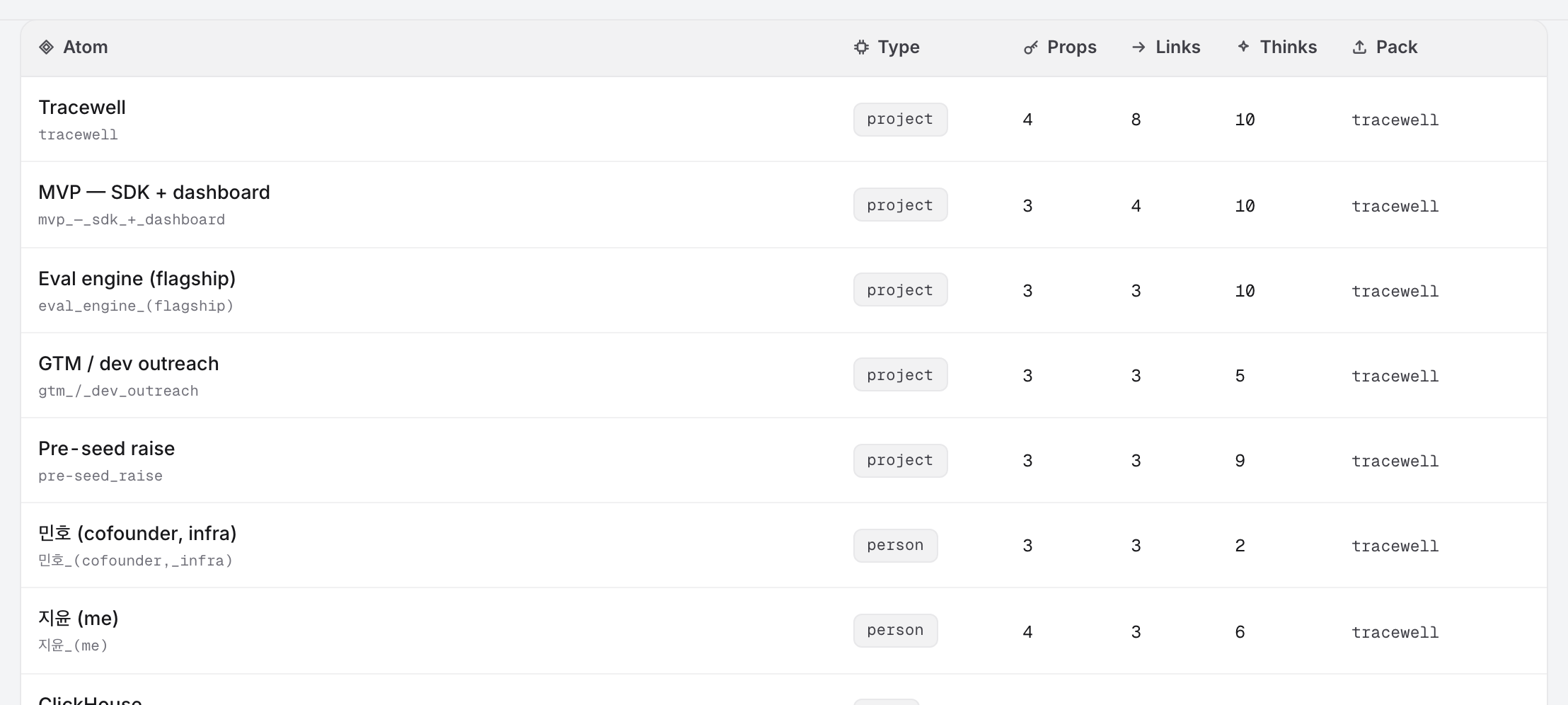
A mounted pack inside the console — every atom in the System memory table: typed, linked, filterable
Why it can be trusted with a mind

Moving never breaks owning.

Signed — tamper is detectable
Ed25519 seal travels with the pack. A modified copy fails verification; provenance survives the move.
Versioned — readable forever
The format carries a compatibility pledge: every future reader reads every past pack. What you publish today opens in 2035.
Additive — merges without a model
A fetched pack folds into your canon by declared identity — zero LLM calls, disagreements preserved as contradictions.
LAPLAS Hub

Give a memory an address.